How to Read Your Tyre Size: Understanding the Numbers on Your Tyre
Have you ever looked at the sidewall of your tyre and wondered what all those numbers and letters mean?
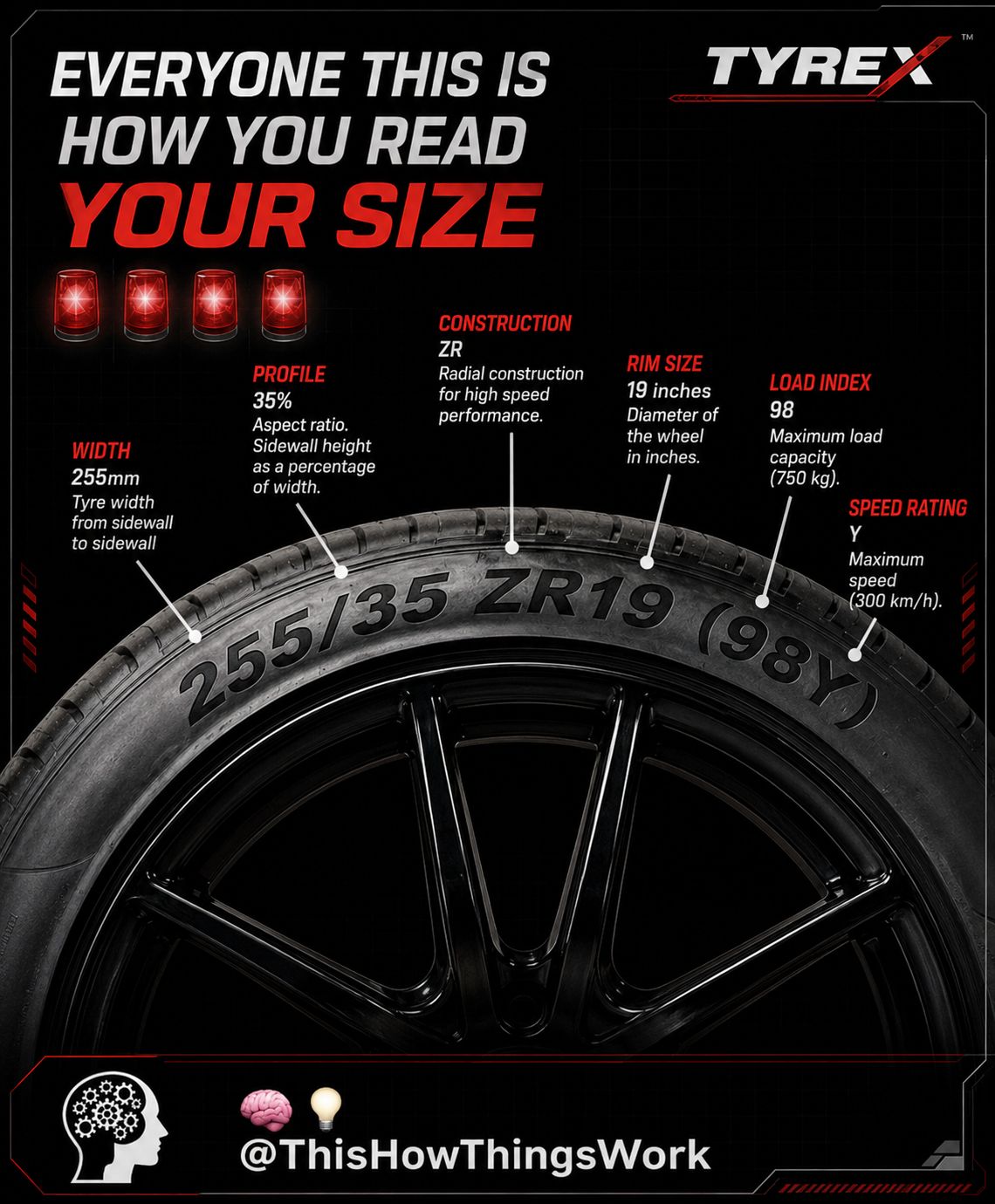
A tyre size marking such as 255/35ZR19 (98Y) contains important information about your tyre’s dimensions, performance capabilities, and compatibility with your vehicle. Understanding these markings can help you choose the correct replacement tyre, improve vehicle performance, and ensure your safety on the road.
Let’s break it down.
Example: 255/35ZR19 (98Y)
255 – Tyre Width
The first number represents the tyre’s width in millimetres.
In this example, 255 means the tyre is 255 mm wide from one sidewall to the other.
Generally:
* Wider tyres provide increased grip and handling.
* Narrower tyres can improve fuel efficiency and perform better in certain weather conditions.
35 – Aspect Ratio (Profile)
The second number refers to the tyre’s profile or aspect ratio.
This number is expressed as a percentage of the tyre’s width.
In this case:
* 35 means the sidewall height is 35% of the tyre’s width.
A lower-profile tyre typically offers:
* Sharper handling
* Improved cornering stability
* A sportier appearance
However, lower-profile tyres may provide a firmer ride compared to higher-profile options.
ZR – Construction and Speed Category
The letters indicate the tyre’s construction type and performance classification.
* R stands for Radial Construction, the most common tyre construction used today.
* Z indicates the tyre is designed for high-speed performance.
Radial tyres are known for:
* Better fuel efficiency
* Improved tread life
* Enhanced ride comfort
19 – Rim Size
The number after the construction code represents the wheel diameter in inches.
In our example:
* 19 means the tyre fits a 19-inch wheel rim.
Choosing the correct rim size is essential. A tyre designed for a 19-inch rim cannot safely fit a wheel of a different diameter.
98 – Load Index
The load index indicates the maximum weight the tyre can safely carry when properly inflated.
In this example:
* 98 corresponds to a load capacity of approximately 750 kg per tyre.
It is important to use tyres with a load index that meets or exceeds your vehicle manufacturer’s recommendation.
Y – Speed Rating
The final letter is the speed rating.
This indicates the maximum speed the tyre is designed to handle safely under recommended conditions.
For example:
* Y = Up to 300 km/h
Common speed ratings include:
* H = 210 km/h
* V = 240 km/h
* W = 270 km/h
* Y = 300 km/h
Always choose a speed rating that meets or exceeds your vehicle’s requirements.
Why Understanding Tyre Size Matters
Using the correct tyre size is important because it affects:
* Vehicle safety
* Fuel efficiency
* Handling and braking performance
* Ride comfort
* Tyre lifespan
* Speedometer accuracy
Installing the wrong tyre size can negatively impact your vehicle’s performance and may even create safety risks.
How to Find Your Tyre Size
You can find your tyre size in three places:
1. On the sidewall of your current tyres.
2. Inside the driver’s door jamb sticker.
3. In your vehicle owner’s manual.
Need Help Choosing the Right Tyres?
At TYREX, our experts can help you select the perfect tyres for your vehicle, driving style, and budget.
Whether you’re looking for everyday comfort, off-road capability, or high-performance handling, understanding your tyre size is the first step toward making the right choice.
Contact TYREX today for professional advice and quality tyres you can trust.
0722402895
 Service Parts
 Accessories/Gift Vouchers/Safety Kits
 Wheels/Rims
 Suspension Parts
 Lubricants
 Lighting & Car Bulbs
.png) Batteries
Batteries
 Fan Belts
.png) Parts
Parts